Most people wake up the same way: a loud, sudden alarm going off in a completely dark room. It works, in the sense that it gets you conscious, but it works by shocking your nervous system awake rather than easing it there. Your body isn't built for that. It's built to wake up gradually, in response to light, the same way it has for most of human history.
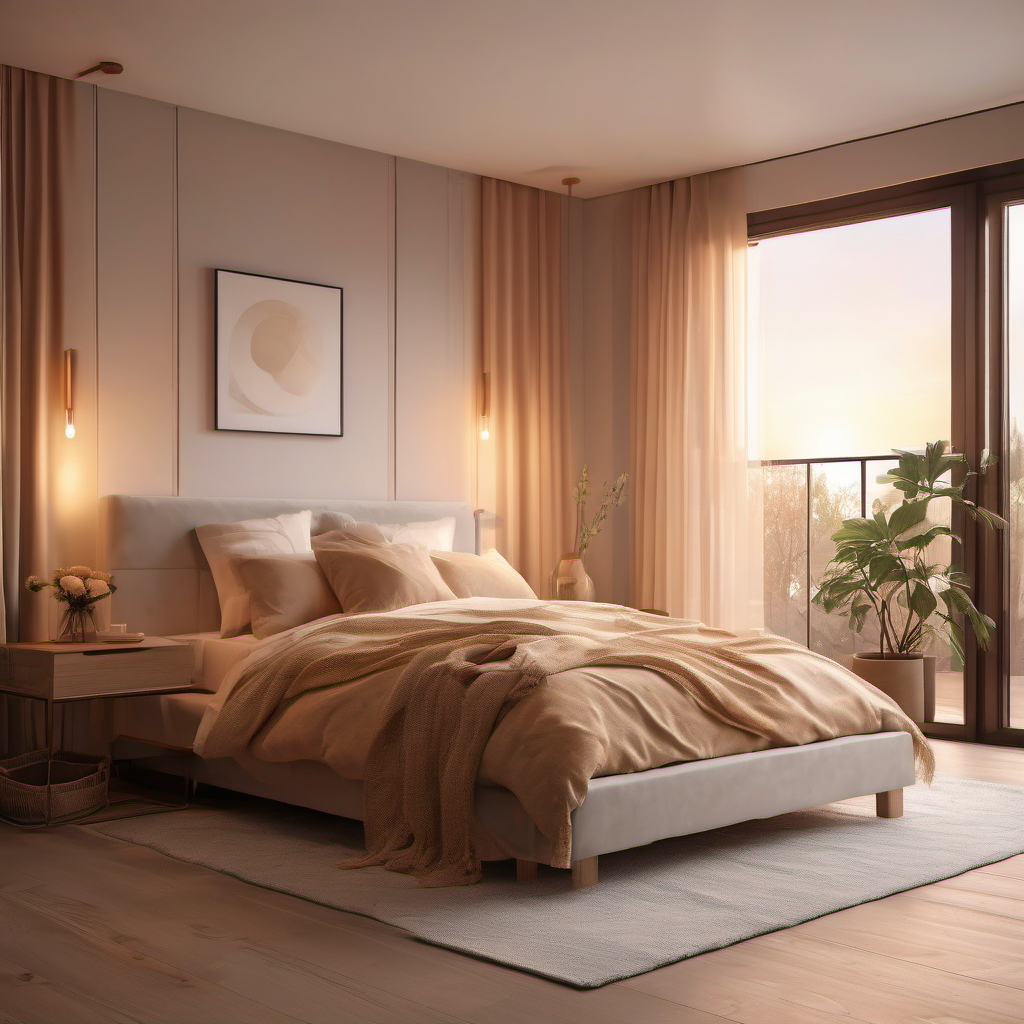
Circadian rhythm runs on light, not sound. As natural light increases in the morning, it signals your body to lower melatonin and start raising cortisol on a gentle curve, the hormonal groundwork for feeling alert. A blaring alarm in the dark skips all of that. It forces a hard stop on sleep before your body has had any signal that morning is coming, which is a lot of why waking up can feel like being yanked out of a hole even after a full night's sleep.
We've started building wakeup routines that work with this instead of against it. Motorized shades crack open a few minutes before the alarm time. Bedroom lighting ramps up slowly, starting dim and warm and shifting brighter and cooler over ten or fifteen minutes, mimicking a sunrise instead of a light switch. By the time an alarm would normally go off, the room already looks like morning, and often no sound is needed at all. The same idea runs in reverse at night: lights dimming and warming gradually before bed, cueing the body to wind down instead of asking it to fall asleep on command the second the lights cut off.
Clients who've set this up describe the difference less in numbers and more in how the morning feels: less groggy, less like being startled, more like actually waking up rather than being interrupted. It's a small change in mechanism, light instead of noise, gradual instead of sudden, but it's working with a system your body already has rather than overriding it.
It's a good example of what automation is actually good for in a home. Not adding more technology for its own sake, but removing friction from something your body was already trying to do on its own.